
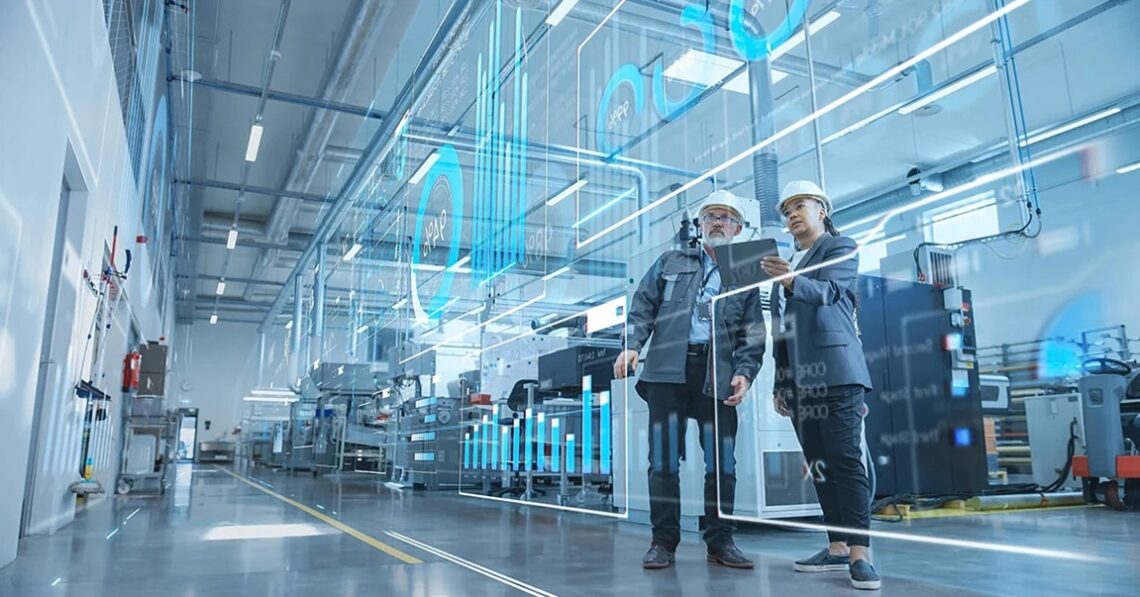
Manufacturers face ongoing pressure to produce high-quality goods, meet customer commitments, manage inventory efficiently, control costs, and adapt to changing market conditions. At the same time, they must coordinate procurement, production, maintenance, finance, workforce management, and supply chain activities.
ERP for manufacturing can bring these processes together in a shared system, helping teams work with consistent information and improve operational visibility. However, not every ERP solution offers the same capabilities. Choosing the right platform requires comparing business requirements, manufacturing processes, integration needs, and future growth plans.
What Is ERP for Manufacturing?
Manufacturing ERP is an enterprise resource planning system designed to coordinate the business and operational activities involved in producing goods. Depending on the solution, it may support production planning, procurement, inventory, sales, finance, asset maintenance, workforce management, and analytics.
Read More: How Ecommerce Accountants Can Manage More Clients Without Hiring
An integrated system can help manufacturers connect information across departments, reduce manual data handling, and make decisions using more timely operational and business data.
Key Features to Compare in Manufacturing ERP Software
Before comparing vendors, manufacturers should identify the capabilities that matter most to their operations.
Production Planning and Scheduling
Evaluate how the system supports production schedules, capacity planning, changing demand, and coordination between manufacturing sites.
Inventory and Supply Chain Management
Look for capabilities that help manage stock levels, synchronize supply with demand, and improve visibility across procurement, inventory, and distribution.
Finance and Accounting
Consider whether financial processes are integrated with purchasing, production, inventory, and sales, allowing teams to assess costs and business performance.
Enterprise Asset Management
Manufacturing equipment requires planned maintenance and effective asset management. Review how the ERP supports maintenance planning, asset records, and related operational workflows.
Plant-System Integration
Many manufacturers use control systems and equipment that generate production and process data. Assess whether the ERP can connect with systems such as Distributed Control Systems (DCS), Programmable Logic Controllers (PLC), and Supervisory Control and Data Acquisition (SCADA).
Reporting and Analytics
Dashboards, reports, and operational metrics can help users monitor performance and identify issues. Confirm that reporting supports the organization’s actual KPIs and data sources.
Scalability and Configuration
For manufacturers operating across multiple plants, companies, or geographies, assess whether the solution can support different operating requirements while maintaining appropriate visibility and control.
Comparing Leading Manufacturing ERP Approaches
Manufacturing ERP options vary in their focus and implementation model. Rather than selecting a vendor based on a feature list alone, compare how each approach fits the organization’s production environment.
| ERP approach | Potential strengths | What to evaluate |
| Manufacturing-focused ERP | May provide workflows aligned with production, inventory, and plant operations | Fit with the company’s specific manufacturing processes and industry requirements |
| Broad enterprise ERP | Can connect manufacturing with finance, procurement, sales, and other enterprise functions | Configuration effort, manufacturing depth, and integration with plant systems |
| Cloud ERP | Can support centralized access and reduce reliance on locally managed infrastructure | Connectivity, security requirements, data governance, and service availability |
| ERP with advanced analytics or AI capabilities | May help identify anomalies, support predictions, or simplify user interactions | Use cases, data readiness, governance, and how recommendations are validated |
A practical comparison should include demonstrations using real business scenarios, not only standard vendor presentations.
Ramco Systems: Manufacturing ERP Capabilities
Ramco Systems offers a manufacturing ERP solution designed to support end-to-end business processes and manufacturing operations. Its stated scope includes procurement, manufacturing, inventory management, supply chain planning, sales and marketing, asset maintenance, finance, human capital management, payroll, and business analytics.
The solution is described as scalable and configurable for organizations operating across multiple plants, geographies, or companies. It is also designed to integrate with existing technology environments.
AI and Machine Learning Features
Ramco describes AI/ML capabilities that can alert users to data anomalies, suggest default values, and pre-populate fields based on historical information. Manufacturers should assess these capabilities against their own data quality, controls, and operational use cases.
Voice and Conversation-Based Interaction
The platform includes voice and chatbot-oriented interaction options intended to make certain ERP tasks more conversational. During evaluation, confirm which workflows support these interfaces and how user permissions and transaction validation are handled.
Event-Driven Notifications
Event-driven notifications can help users see relevant alerts and exceptions. Review whether notifications can be configured around the organization’s operational priorities and escalation processes.
Role-Based Hubs
Ramco describes a “Hub It” approach, including Inventory and Production Reporting Hubs, intended to bring relevant user activities into a consolidated screen. Assess whether these hubs match the daily workflows of production, inventory, and management teams.
Real-Time Integrator
Ramco’s Real Time Integrator (RTI) is designed to connect plant control systems such as DCS, PLC, and SCADA with ERP and management information systems. Data that may be transferred includes parameter measurements, alarms, production hours, energy consumption, and equipment run hours.
Contract Labour Management
For organizations using contract workforces, Ramco lists capabilities for managing workforce productivity, statutory compliance, manpower planning, exception handling, and attendance reconciliation.
ERP Modules and Their Role in Manufacturing
Ramco’s manufacturing ERP offering is built on a common platform with modules that address connected business functions.
- Supply Chain Management: Supports business visibility, inventory management, and synchronization of supply with demand.
- Enterprise Asset Management: Supports planning, maintaining, and managing assets through a cloud- and mobile-ready platform.
- Production and Manufacturing: Supports production scheduling and coordination to help manufacturers respond to changing requirements.
- Finance and Accounting: Connects financial activities with broader business processes.
When comparing ERP platforms, determine whether these functions are included in the proposed scope, require separate modules, or depend on additional integrations.
How to Choose the Right Manufacturing ERP
- Map Your Current Processes
Document how procurement, production, inventory, maintenance, finance, and workforce activities operate today. Identify manual work, duplicated data, reporting delays, and process bottlenecks.
- Define Business Priorities
Set clear objectives, such as improving schedule adherence, inventory accuracy, production visibility, asset utilization, or financial reporting. These goals will help guide vendor evaluation.
- Check Integration Requirements
List the systems and equipment the ERP must connect with, including plant control systems, existing applications, and reporting platforms. Confirm integration scope, responsibilities, and potential additional costs.
- Test Real Manufacturing Scenarios
Ask vendors to demonstrate relevant workflows using representative examples, such as production schedule changes, material shortages, maintenance events, or plant data transfer.
- Evaluate Deployment and Scalability
Consider the organization’s infrastructure, security, data governance, operating locations, and growth plans. Confirm how the solution supports additional plants, companies, or geographies.
- Assess Usability and Change Management
Include production staff, planners, inventory teams, finance users, and managers in the evaluation. Review training needs and whether the system’s interfaces support their daily tasks.
- Compare Total Cost and Implementation Scope
Review licensing or subscription costs, implementation, data migration, integrations, training, support, and future changes. Compare proposals using the same assumptions and scope.
Conclusion
Choosing the best ERP software for manufacturing starts with understanding the organization’s processes and defining measurable business goals. Manufacturers should compare production planning, supply chain management, finance, asset maintenance, plant integration, analytics, scalability, and usability—not simply the number of features offered.
Ramco Systems provides a manufacturing ERP suite that connects core business functions with manufacturing operations and offers capabilities such as plant-system integration, AI/ML features, event-driven notifications, and contract labour management. Manufacturers considering Ramco or another ERP provider should validate the relevant functionality through scenario-based demonstrations and confirm how the proposed solution will fit their operational and technology environment.
Frequently Asked Questions
What is ERP for manufacturing?
ERP for manufacturing is software that connects business and operational processes such as production, procurement, inventory, finance, maintenance, and supply chain management.
How does manufacturing ERP improve operations?
It can improve visibility across departments, reduce duplicate data entry, support production and inventory planning, and help teams make decisions using more consistent information.
What should manufacturers compare when selecting ERP software?
Compare production planning, inventory and supply chain capabilities, finance, asset management, integration, analytics, scalability, usability, implementation scope, and total cost.
Can manufacturing ERP integrate with plant equipment and control systems?
Some solutions support integration with systems such as DCS, PLC, and SCADA. Manufacturers should confirm which equipment and data flows are supported and what integration work is required.
Is Ramco Manufacturing ERP configurable?
Ramco describes its manufacturing ERP as flexible and configurable for different business needs, including multi-plant, multi-geography, and multi-company operations. Specific configuration options should be confirmed during product evaluation.
Read More: AI Health Coach: The Smarter Way to Take Control of Your Health